
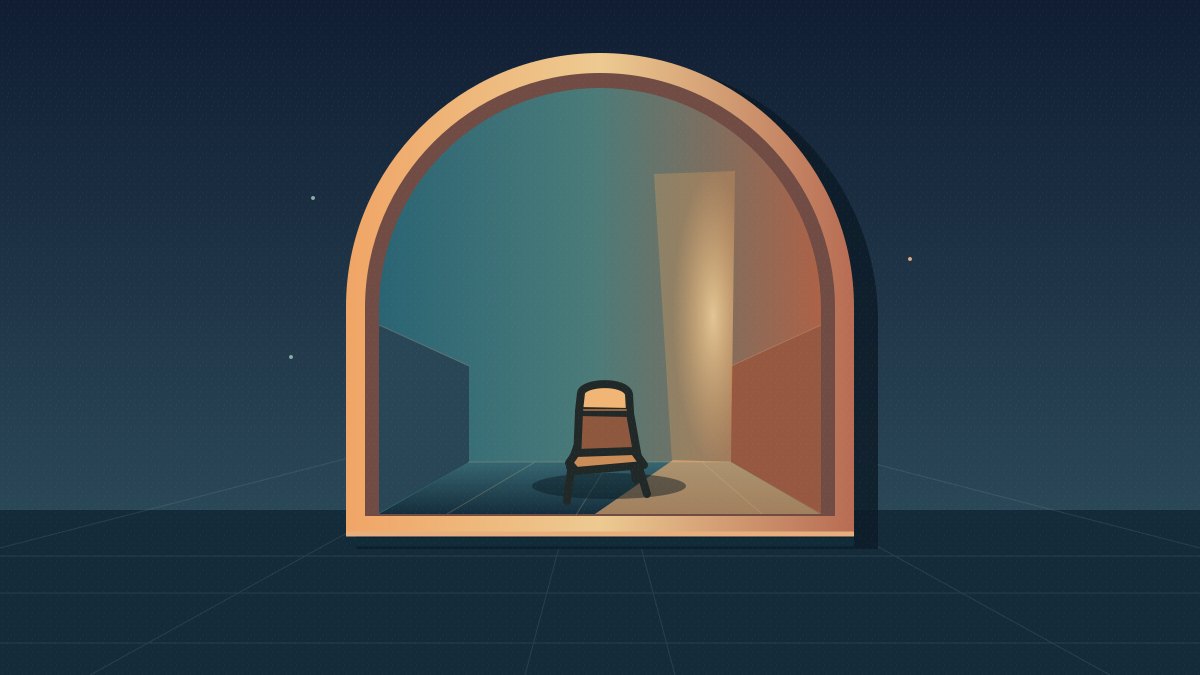
A virtual set can turn from daylight to dusk while you’re still walking through it. The harder question comes when you turn around: is the chair you passed on the way in still in the same place? Google opened Genie 4 to developers on November 19 through the Gemini Interactions API and Google AI Studio. The release makes that kind of live scene editing available to builders. Google DeepMind’s own model card explains why an impressive walkthrough is not the same thing as a dependable simulation.
What developers can build now
A developer can start with a text description, a reference image, or both. Google says the model generates a world at 720p and 24 frames per second with synchronized audio. Keyboard controls let the viewer move through the scene. Text instructions can change the lighting, weather or objects as the viewer moves. In a film previsualization, for example, a crew could explore how a fictional set feels after dark without first modeling every surface or positioning every light. That is a potential use, not a result measured in a production shoot.
The developer release is distinct from the browser rollout the day before. Project Genie gives eligible users an interface to explore generated environments. The API and AI Studio let developers experiment with incorporating that experience into their own tools. The product announcement also gives a reason to keep those demos separate: the three-minute session feature it describes applies to Genie 3, not Genie 4.
The test begins on the way back
Google’s release describes reasoning that helps keep the scene coherent. The model card puts a boundary around that claim: visual details and objects can drift over longer sessions, after complex edits, or as users move through a scene. Spatial accuracy and complex physical interactions are also still being worked on. A room can look convincing on the first pass without reliably retaining the same layout on the second.
How much that matters depends on the job. A designer exploring the mood of a fictional venue could get useful ideas even if a chair moves. Someone mapping an actual venue needs the doors and aisles to line up with the real building. And if a robotics team wants to compare how two systems respond to the same obstacle, it needs to know the obstacle didn’t shift between runs. A polished video cannot answer either of those questions.
What would make it more useful
The next convincing demonstration would not just show a new setting. It would walk out of a room, make an unrelated edit, come back, and compare the position of the same objects across repeated runs. It would report how often the layout holds, not just show the best take. Until there is evidence like that for the task at hand, Genie 4 is easier to judge as a fast way to explore design ideas than as a place to settle questions about dimensions or physical behavior.